Why This Cardiologist Relies on a 10-Minute Daily Yoga Habit to Decompress
According to TODAY.com, cardiologist Dr. Annapoorna Kini makes time for a short daily yoga practice, usually 10 to 15 minutes on weekdays. The detail worth noticing is not a promise that one routine can erase stress; it is the modest scale of the habit.
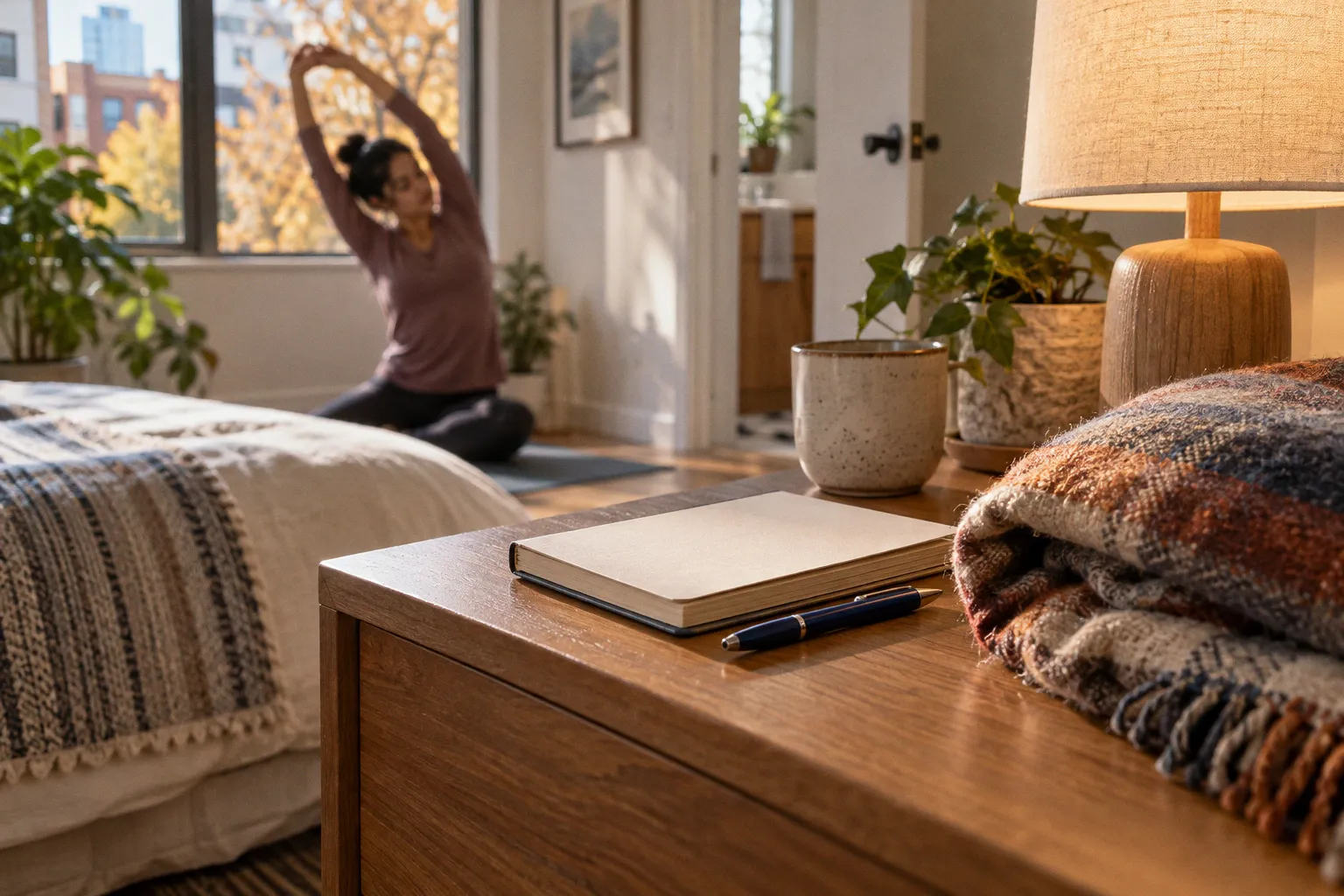
When your bandwidth is already thin, a practice that fits into an ordinary day may be easier to sustain than another ambitious self-care plan.
A small practice, not another performance target
Kini, who works at Mount Sinai Fuster Heart Hospital in New York, also practices with a yoga teacher for 45 minutes on weekends. She favors flow-style yoga and says breathing is an important part of the practice. TODAY.com reports that she uses yoga to help manage stress in her work and home life.
That is one cardiologist’s routine, not proof that the same schedule will work for everyone. Still, it offers a useful reality check if you have been treating stress relief as something that requires a free hour, a perfect environment, or a complete overhaul of your life.
- Ten minutes can be a starting point, not a test of discipline.
- The goal is to make room for a pause, not to perform yoga “correctly.”
- If a routine adds pressure, it may be too complicated for your current bandwidth.
The trap of over-functioning is familiar: you turn recovery into another task to excel at, then blame yourself when the plan collapses. A smaller practice can lower that barrier.
Breathing and finding a workable version
The report describes yoga breathing as more deliberate and controlled than everyday automatic breathing. Kini also recommends keeping distractions, including a phone, out of the practice when possible. Those details point to a simple structure: give your attention somewhere to land, and make the practice short enough that starting feels manageable.
There is no single required style. The article says people can choose slow, fast, gentle, or restorative yoga. It also notes that Kini recommends chair yoga for heart patients and people with mobility issues or those easing into exercise. If movement is uncomfortable or you have health concerns, don’t treat a news article as individualized medical guidance; choose an approach that fits your needs.
The useful question is what you can repeat
Kini also does Pilates, weights, and cardio, according to TODAY.com, but that does not mean you need to copy her whole routine. The practical point is to identify one low-friction way to step out of the stress loop, rather than building a demanding program you cannot maintain.
Try asking yourself: what is the smallest pause I could make room for on a busy weekday, without turning it into one more thing I can fail at?