How Nighttime Heat Exposure Triggers Physiological Stress and Anxiety
A new randomized crossover trial published in Environment and Health — and reported by News-Medical — found that nighttime heat exposure severely disrupts sleep cycles and triggers a wide array of…
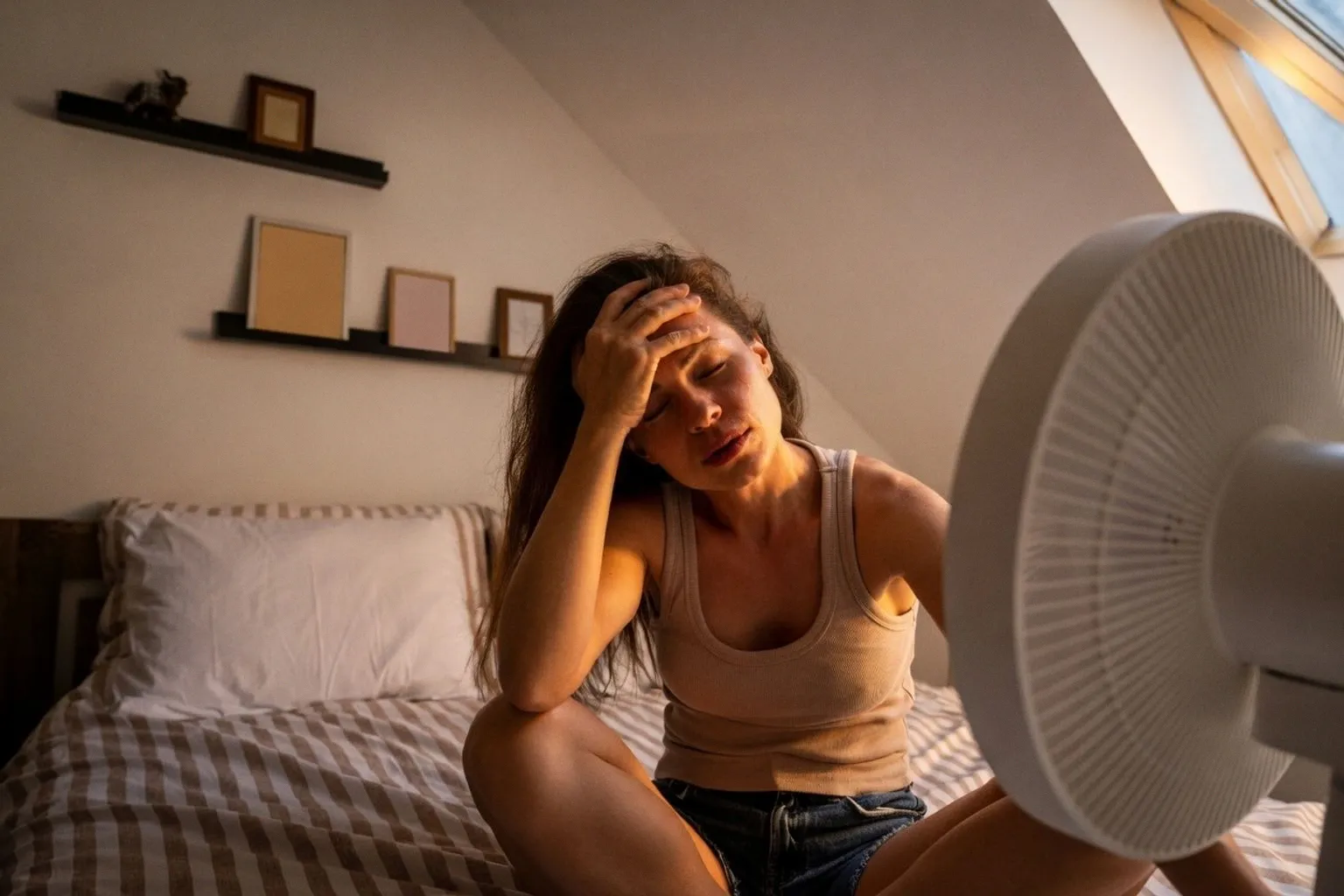
A new randomized crossover trial published in Environment and Health — and reported by News-Medical — found that nighttime heat exposure severely disrupts sleep cycles and triggers a wide array of biological markers linked to stress and anxiety in young adults. For anyone whose day already runs on tight margins of rest, the finding reframes a warm bedroom from a comfort issue into a measurable physiological stressor. It places heat alongside the more familiar disruptors — caffeine, screen light, late meals — as something the nervous system actually registers.
What a hot room does to the sleep architecture
In the trial, nighttime heat exposure didn't just make sleep feel worse. It interfered with the structure of sleep itself, fragmenting the cycles the body uses for restoration and shifting autonomic balance toward a higher sympathetic baseline. The downstream effect, by morning, was a measurable shift in biological markers associated with stress and anxiety. In plain terms: the nervous system stayed partially activated through what should have been its down-regulation window.
This matters because the cost of an interrupted cycle isn't only felt as fatigue. The body logs the disruption in inflammatory and hormonal signals that influence mood and stress tolerance the next day. A single compromised night is recoverable; a run of them is what pulls the autonomic baseline upward and keeps it there.
Stress, sleep, and the inflammatory loop
A separate study published on MDPI looked at academic stress in doctoral research scholars and found significant correlations between high perceived stress, poor sleep quality, elevated evening cortisol, and systemic inflammatory markers. The pattern lines up with the heat trial: when sleep loses quality, the HPA axis doesn't fully stand down at night, and inflammation stays elevated into the day. Cortisol, which should bottom out in the late evening, remains above its proper nadir, and the system carries that arousal forward into whatever the next morning brings.
The Week also reported on related work linking poor sleep and daily stress to shifts in women's metabolism — a reminder that the cost of chronic sleep loss extends beyond mood alone.
One measurable adjustment
The clearest intervention the heat trial supports is environmental: keep the sleeping space cool enough that core temperature can drop on schedule. A practical target is a room cool enough that a light blanket, not a single sheet, feels comfortable. Track how often you wake between roughly 2 a.m. and 5 a.m., the window where thermal disruption most often reveals itself. If those wakings decrease over a two-week stretch, the nervous system is being given a real chance to down-regulate, and the markers the trial measured should follow.