Beyond the Headlines: Evaluating New Mental Health Initiatives and Nutritional Science
The BBC reported this week on the launch of "Here for Chris," a mental health initiative, though public details on the program's scope, funding, and rollout remain limited.
It lands in a busy news window that also includes a new UCSF study on food and mood in JAMA Psychiatry, an Everyday Health piece on stress and dry eye, and Spartan Newsroom reporting on mental health programs for police officers. Different populations, same underlying question: what does real support actually look like when the cognitive load is already maxed out?
What a small study quietly demands you take seriously
The UCSF pilot, published September 23 in JAMA Psychiatry and funded by the National Institutes of Health, is small enough to dismiss and rigorous enough that I want you to sit with it. Twenty participants, average age 44, 70 percent female, all with high BMI and at least one metabolic condition like hypertension or elevated LDL cholesterol. Fourteen also carried an anxiety diagnosis alongside depression. Each participant cut their intake of ultra-processed foods by more than 85 percent over a four-week window, then swapped with a control arm that stayed on their usual diet.
A few things worth noticing about the design:
- The crossover means the same person is being compared against themselves, not against strangers.
- Everyone had a metabolic condition at baseline, so the result is not from a generic healthy population.
- Participants picked and bought their own food with guidance from the research team, which mimics how the change would actually look in your kitchen.
The headline results: moderate to large improvements across three different measures of depression, plus modest improvements in anxiety scores. This is a pilot, and the limits are real, but it is the first study to compare depression symptoms in the same participants before and after they moved from a typical ultra-processed diet to a minimally processed one.
Senior author Andrew Krystal said the work "successfully established the viability of carrying out this research in a larger-scale trial." Phase 2 enrollment is expected to begin in 2028.
Why the food-mood link keeps showing up in your bandwidth
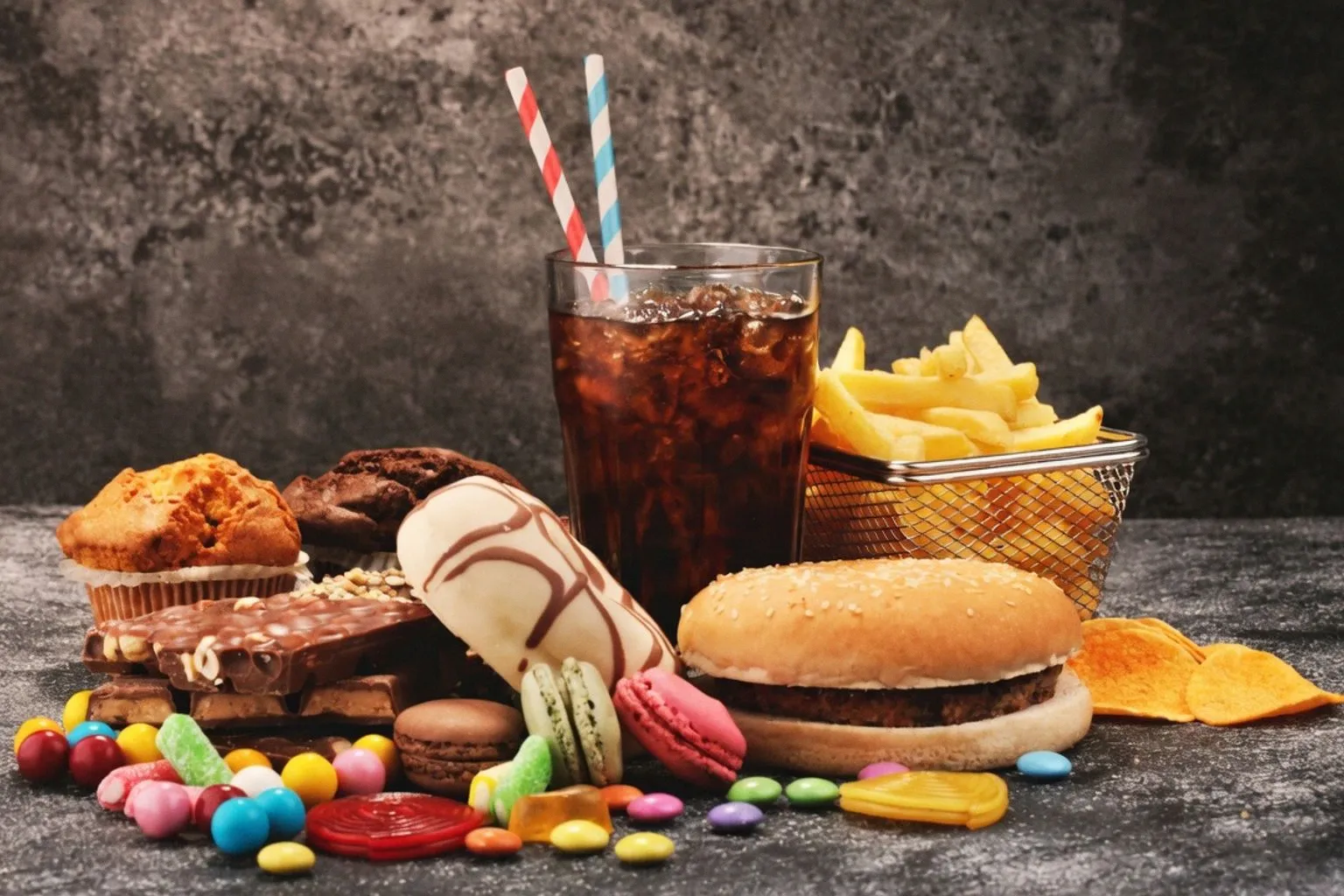
Here is the mechanistic story the researchers are betting on, and it lines up with patterns I see constantly in clinical practice. Ultra-processed foods, including packaged snacks, fast food, sugary drinks, and the industrially manufactured products built to be hyper-palatable, may damage the gut's protective lining. That damage can drive low-grade, chronic inflammation throughout the body, which can either trigger depression directly or make you far more vulnerable to it. In Chagwedera's words, "junky processing may harm your gut in ways that ripple up to your brain."
She also noted that cutting ultra-processed food is genuinely hard, because these products are highly palatable, cheap, and convenient, and trigger dopamine in ways that promote craving. That is why willpower alone tends to fail here.
This deserves to be taken seriously as inflammatory biology applied to your snack drawer. You already suspect the late-night bag of something crunchy is quietly working against your mood. The question worth sitting with is whether you are ready to treat that one behavior the way you would treat sleep or therapy, as a deliberate experiment rather than another vague intention. So here is what I want to ask you: if you committed to a four-week experiment of cutting ultra-processed food by 85 percent, what would actually have to change in your daily routine, and is the trade-off worth the mood lift the data is hinting at?